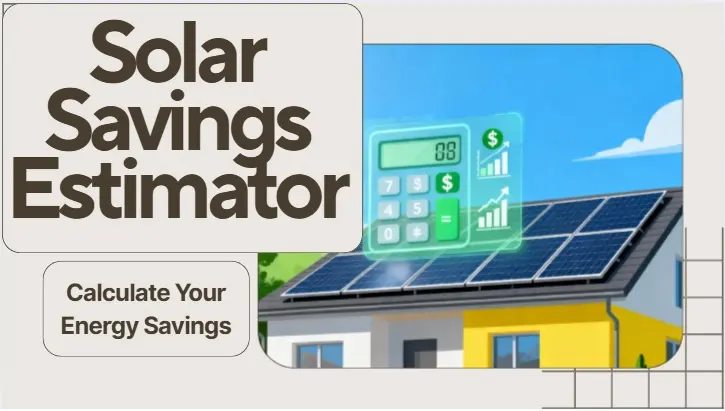
With rising energy costs and growing environmental concerns, many are turning to solar as a sustainable, cost-effective solution. Our Solar Savings Estimator helps you see how much you could save based on your location, energy use, and system size—offering a clear picture of your return on investment.
Whether you’re exploring solar or ready to install, understanding your financial benefits is key. Let’s review how the Solar Savings Estimator works and why it’s essential for energy independence.
What Is a Solar Savings Estimator?
Advanced Solar Savings Estimator
Strategic ROI analysis for your clean energy transition.

1. System Specs
2. Financial Context
3. ROI Summary
Cumulative Wealth Projection
A Smart Tool for Smarter Energy Decisions
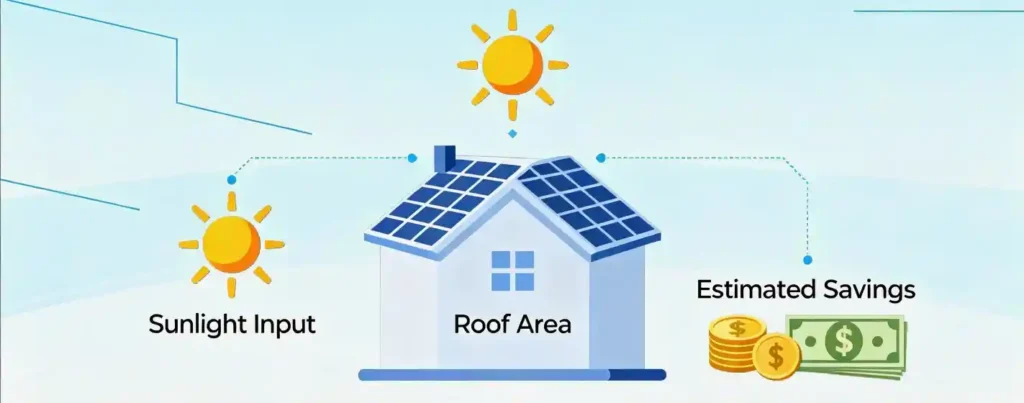
A solar savings estimator is an online calculator that estimates how much you can save by installing solar panels. It factors in:
- Your average monthly electricity bill
- Your geographic location and local solar irradiance
- Available government incentives and rebates
- The size and efficiency of your solar panel system
By inputting a few simple details, you receive a personalized estimate of your long-term savings — often spanning 20 to 25 years.
Why Use a Solar Savings Estimator?
Understand Your ROI Before You Invest
Before making a significant investment in solar technology, it’s crucial to understand the financial implications. A solar savings estimator provides:
- Clarity: Know how much you can save each month and each year on your electricity bills.
- Confidence: Make informed decisions backed by data.
- Customization: Tailor your estimate based on your home’s unique energy profile.
- Comparison: Evaluate different system sizes or financing options.
Using a solar savings estimator empowers you to plan your solar installation with precision and peace of mind.
How Location Impacts Solar Savings
Sunlight, Utility Rates, and Local Incentives
Your location plays a pivotal role in determining your solar savings. The solar savings estimator uses your ZIP code or city to assess:
- Sunlight exposure: Areas with more sunshine yield higher energy production.
- Electricity rates: Higher utility rates often lead to greater savings.
- State and federal incentives: Tax credits, rebates, and net metering policies can significantly reduce upfront costs and boost long-term returns.
For example, a homeowner in Arizona may see higher savings than someone in Seattle due to more consistent sunlight.
Example (for Oman):
In Oman, solar adoption is supported by national initiatives. Visit the Authority for Public Services Regulation (APSR) to learn about local solar policies and grid integration.
How to Use the Solar Savings Estimator
Simple Steps to Estimate Your Solar Panel Savings
Using our solar savings estimator is quick and easy:
- Enter your ZIP code to determine local solar potential.
- Input your average monthly electricity bill to gauge your current energy usage.
- Select your home type and roof orientation (if known).
- Review your personalized savings estimate, including:
- Payback period
- Lifetime savings
- Environmental impact (e.g., CO₂ offset)
This estimate helps you decide whether solar is right for you — and how soon you’ll start seeing returns.
Maximize Your Solar Investment
Tips to Increase Your Solar Panel Savings
Once you’ve used the solar savings estimator, consider these strategies to maximize your benefits:
- Optimize panel placement for maximum sun exposure.
- Choose high-efficiency panels to generate more power.
- Monitor your system’s performance regularly.
- Take advantage of incentives before they expire.
The more informed your decisions, the greater your solar savings.
Try the Solar Savings Estimator Now
Ready to see how much you could save? Use our interactive Estimate Your Solar Panel Savings calculator and take the first step toward a cleaner, more cost-effective energy future.